
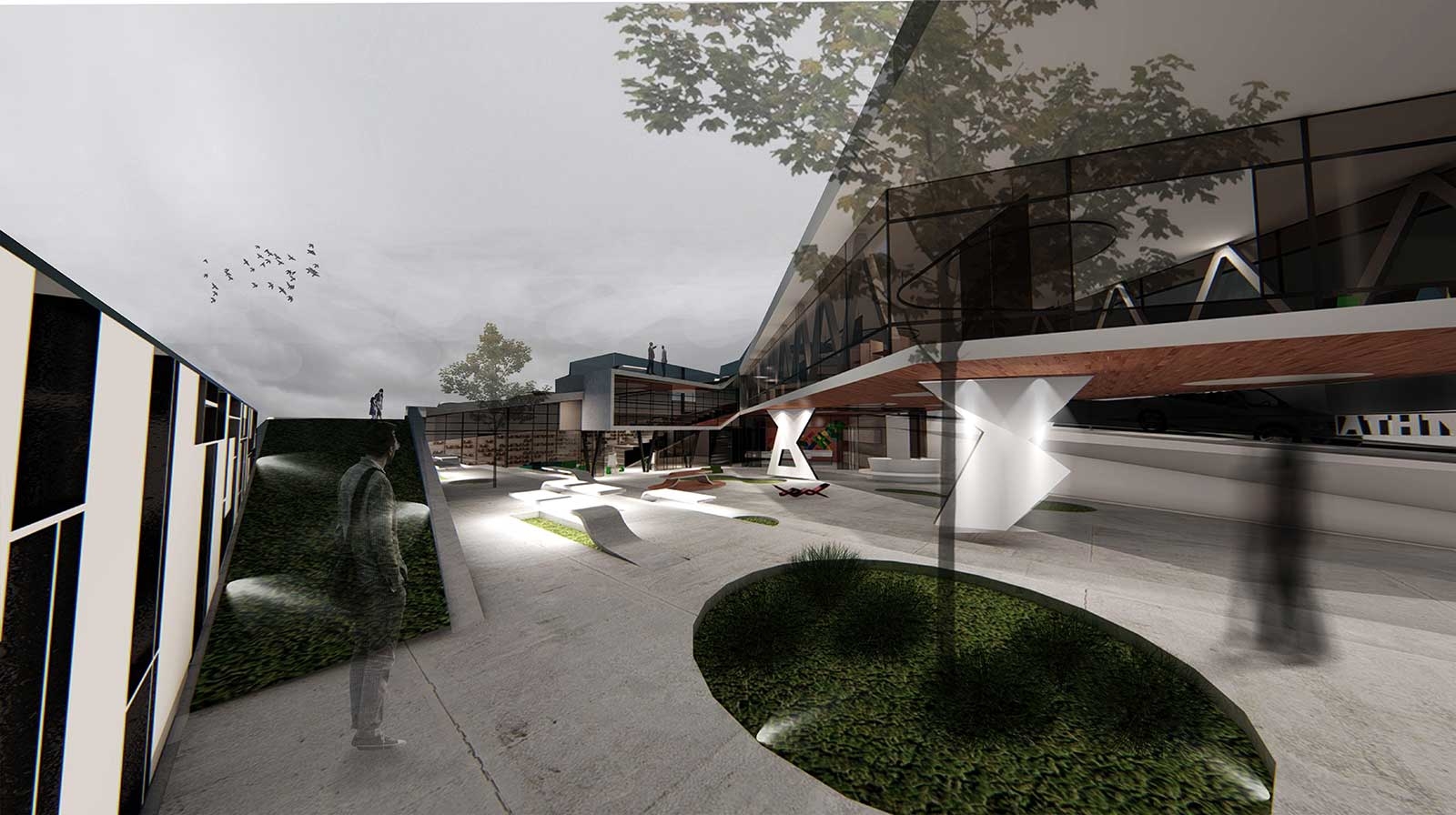
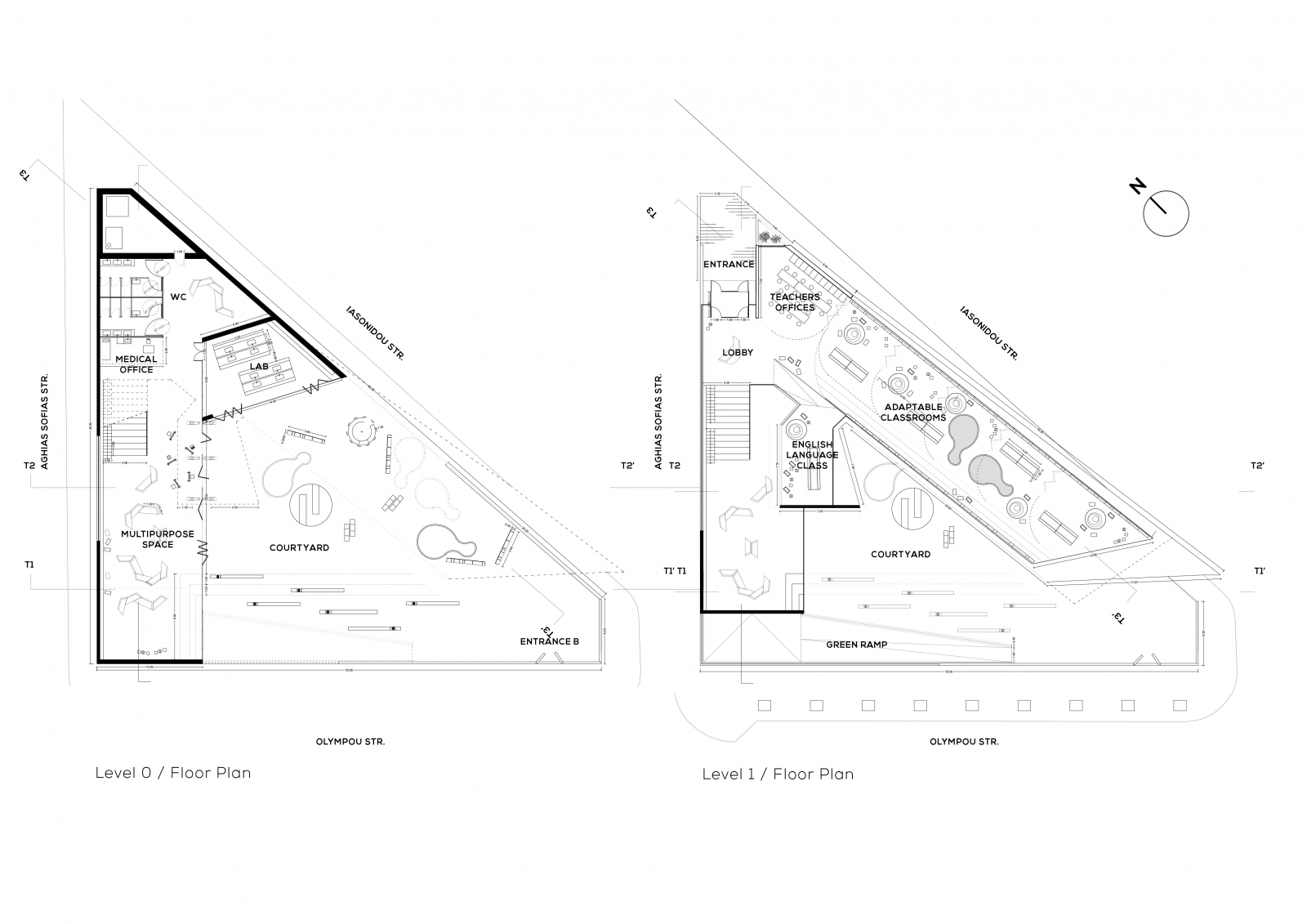
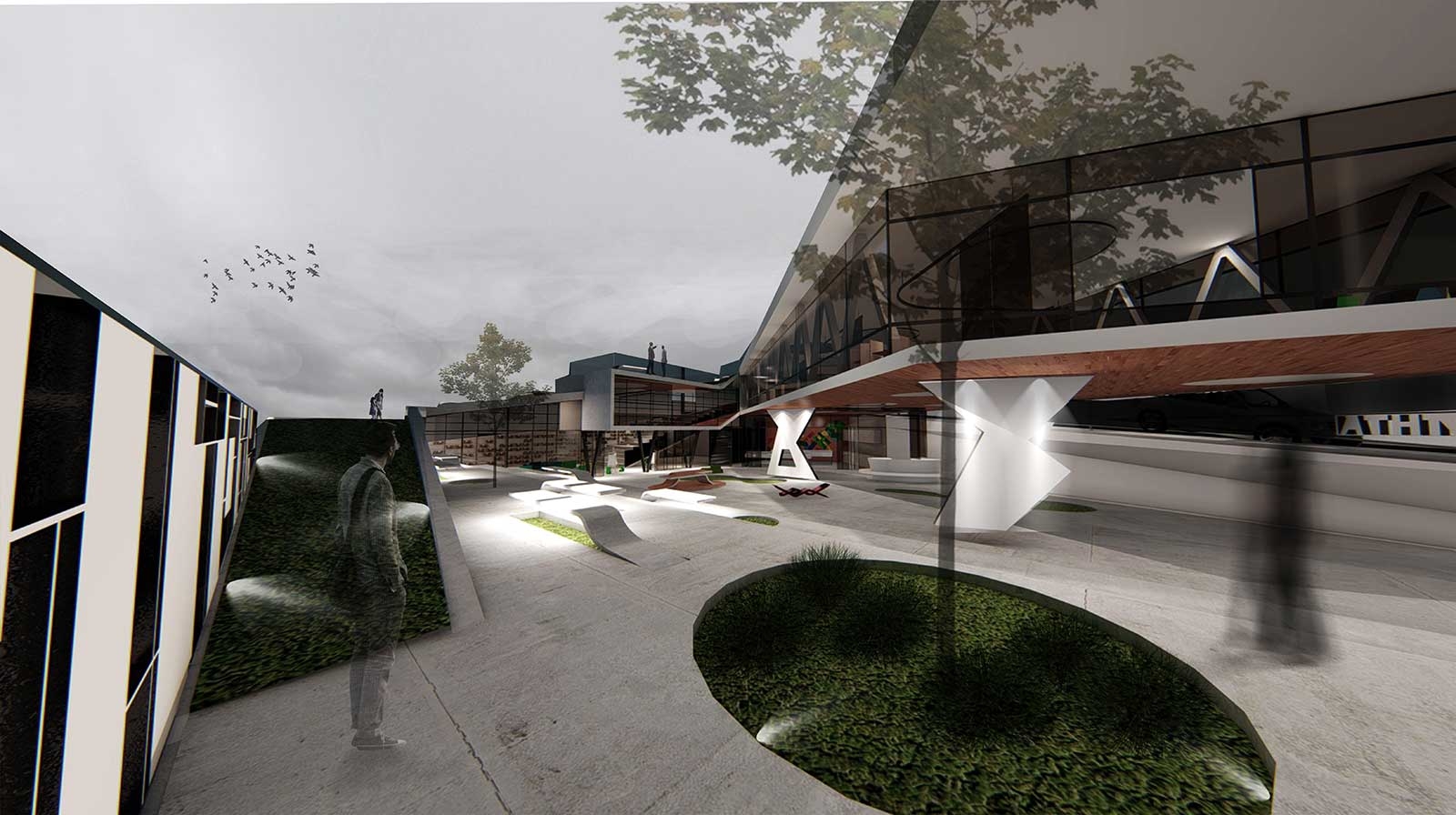
The project is based on the need for a conceptual design of an innovative biocimatic elementary school in the historical center of Thessaloniki which shall be used both for educational activities and as a cultural center for the neighborhood. The proposal is characterized by the dynamic design of the building, adapting to the triangular site plan expanding in all three sides of it but rising to a max height of 7 meters above street keeping the human scale especially for a building designed for children of young ages.
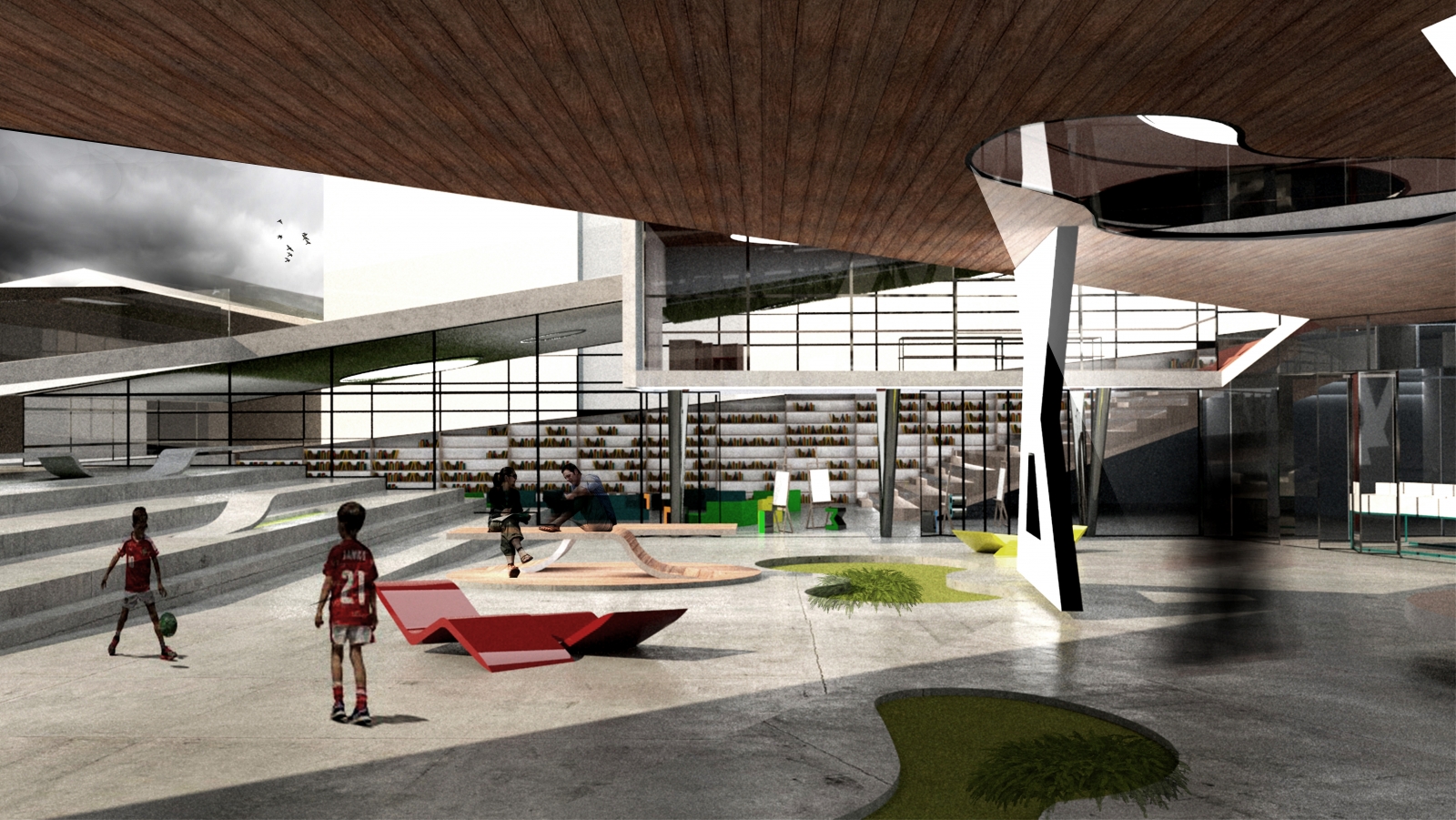
The proposed building shapes a triangular floor plan, similar to its site, with an inclined green roof which provides more open space for children to play and at the same time strengthens the sustainability of the building, reducing its thermal losses and thereby its energy consumption. The building is designed in order to provide as much open and public space as possible for children to play and for the community to meet. Its triangular shape is forming a central yard which faces towards the south providing the yard with natural light while the building is protecting it by the strong north-west winds. A pilotis is formed by the elevation of the building’s volume, leaving more open space for play while protecting from rain.
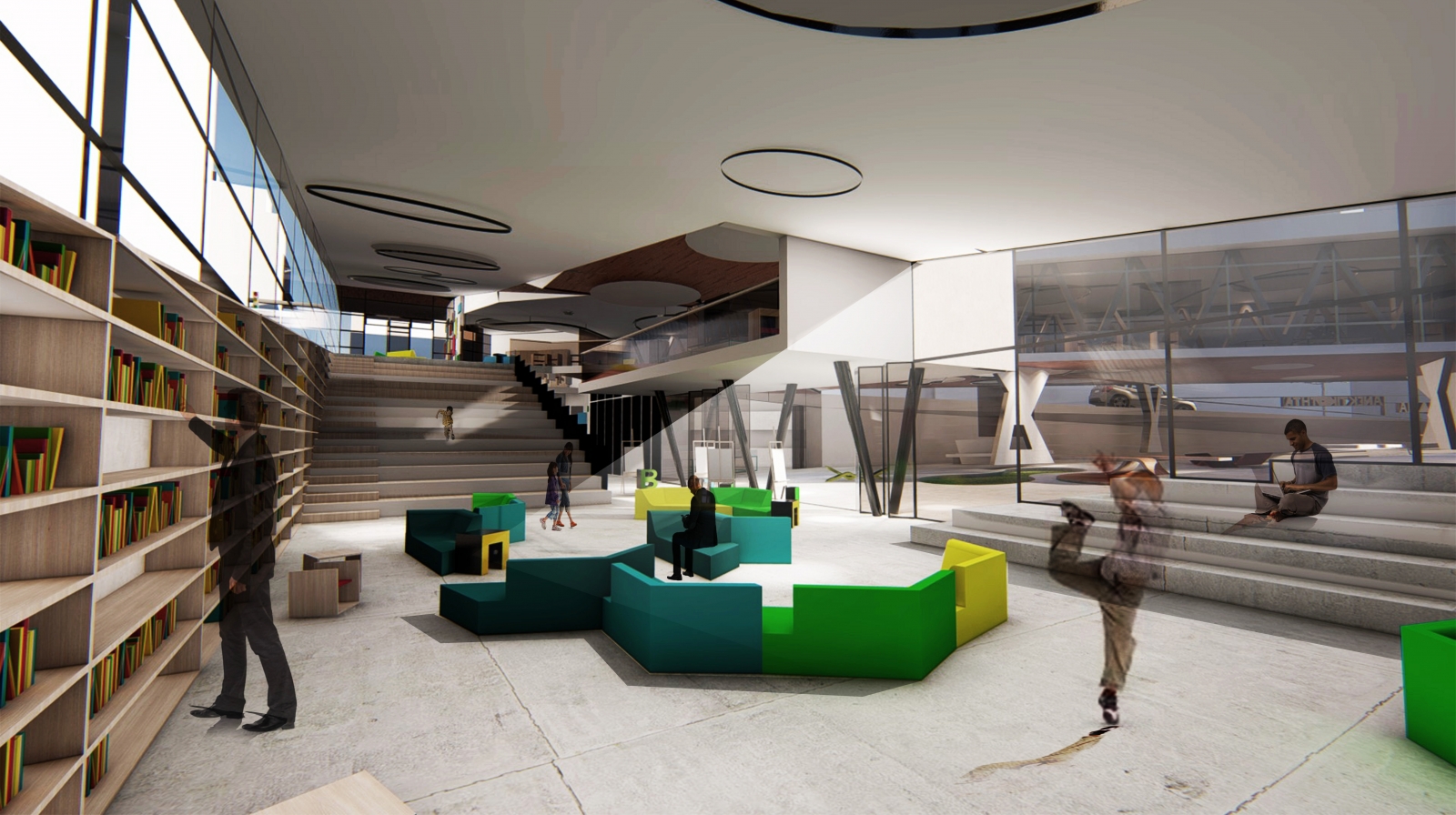
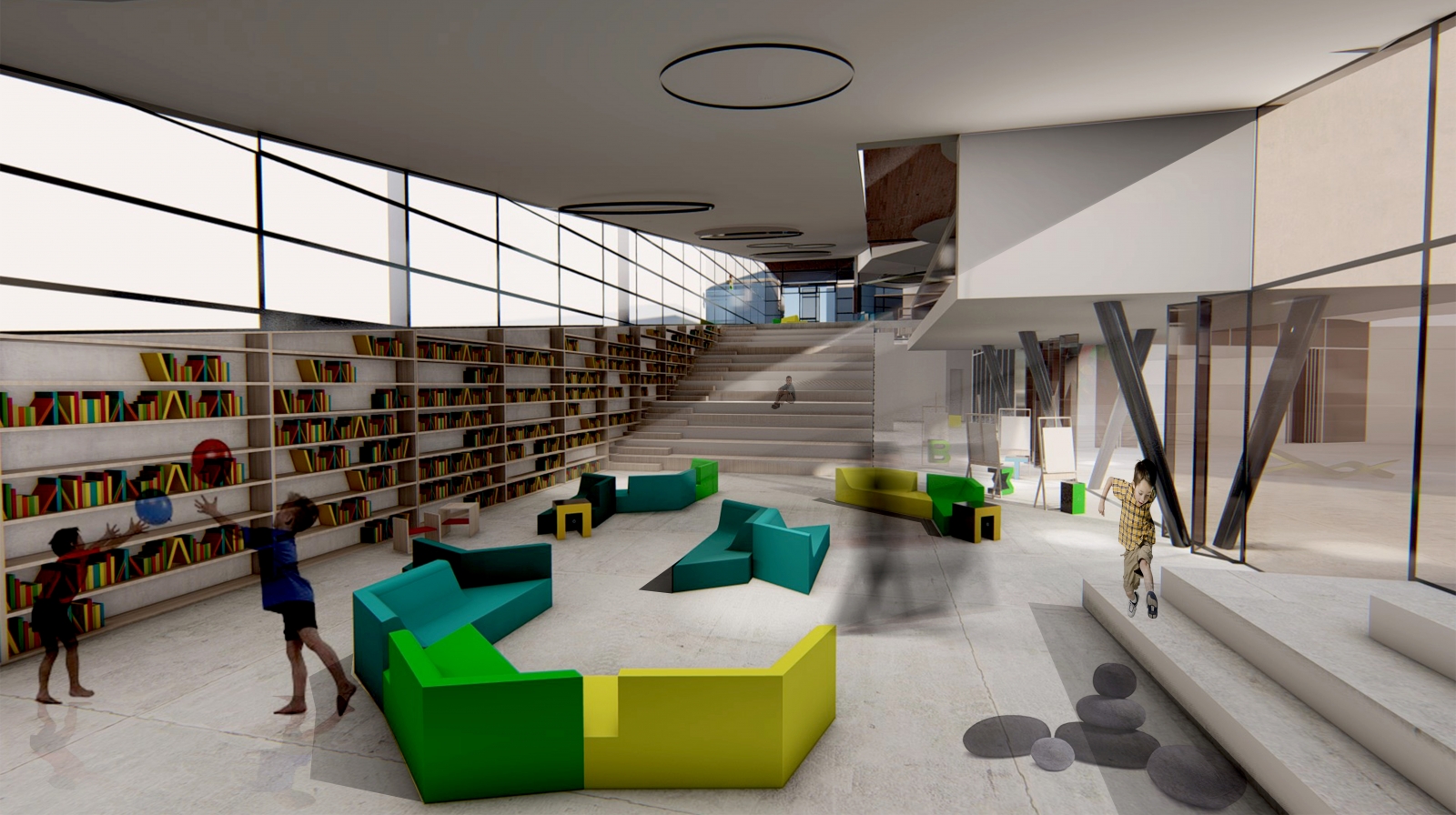
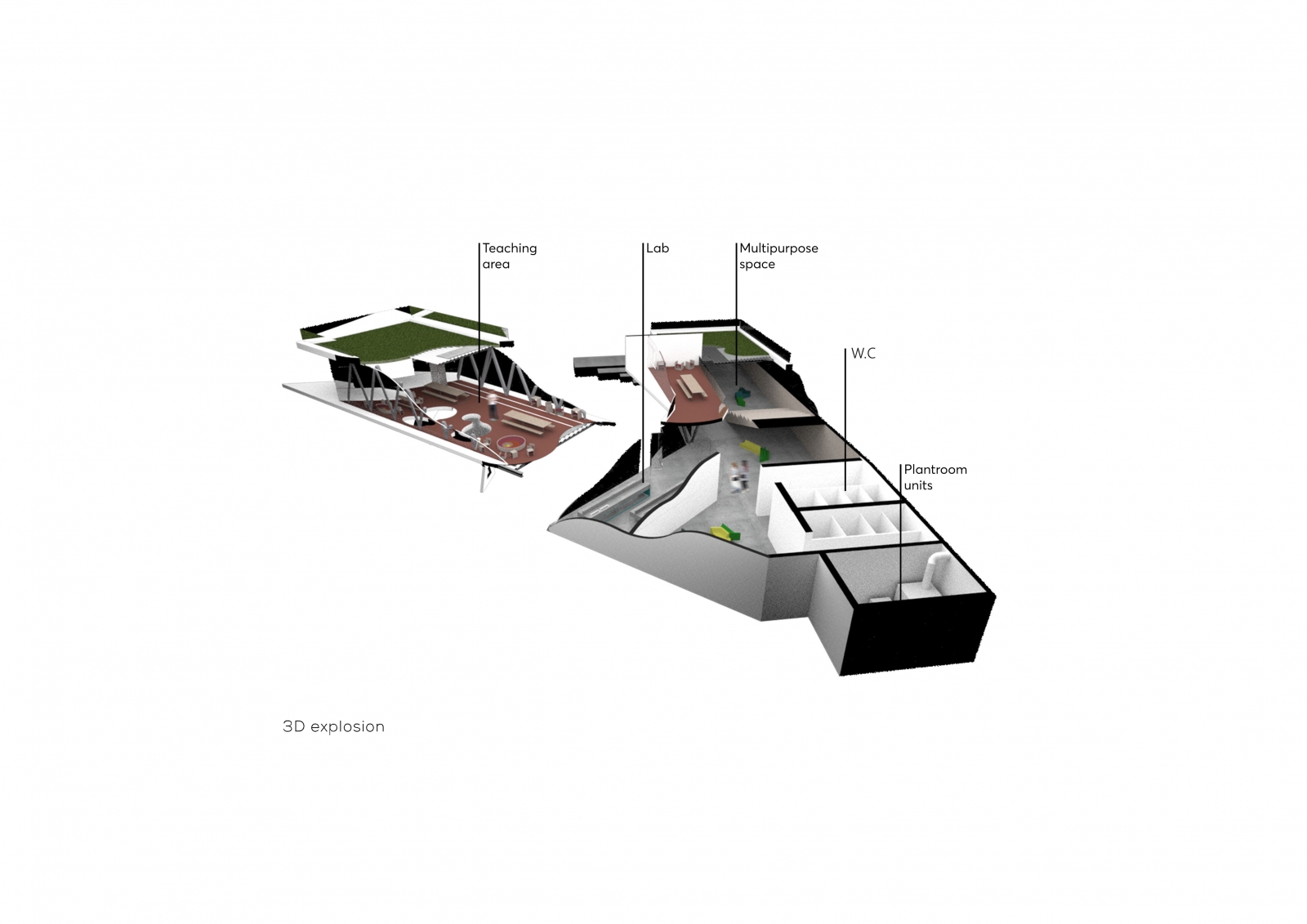
The façade of the building is based on curtain walls while the structure consists of a metallic frame and a light concrete covering. The interior is separated into three zones. The central amphitheater which is transformed into a multipurpose space is capable to host social activities and gathering of the community. At the same time bookcases cover the main wall of this space, double height glass facades and a large opening surface towards the central yard make this space adequate for teaching, presentations and other indoor or outdoor activities, taking advantage of the Mediterranean warm climate of the city. The second zone consists of the main entrance, the teachers’ office and the administration office, while the third zone hosts the teaching areas. The concept for this zone is based on an adaptive design of the space, without solid walls and classrooms. The wall becomes a light movable surface which can divide the space into small or bigger classrooms introducing the idea of more social-centered educational system, where the child learns to collaborate, co-exist and play avoiding sitting in a certain desk looking towards a certain point, but developing a more holistic way to see things.